

Champagne Wine Regions
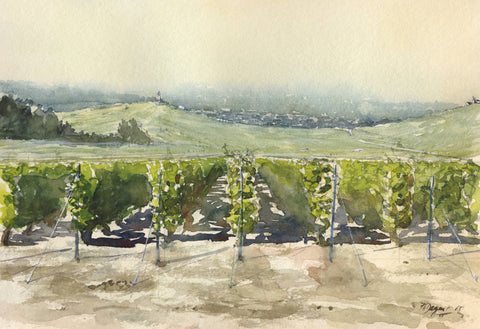
Wine regions
In the Champagne region, there are 4 main areas. They represent approximately 3% of France's wine-growing regions, with 34,200 hectares, and 0.5% of the world's total wine-growing area. They all have their own characteristics, whether it's the relief, the soil, or the subsoil. These differences directly affect the champagne. The same grape variety will not have the same profile in different regions. Try two Pinot Noir or two Chardonnay champagnes from two different regions and experience these differences!

Côte des Bar
The Côte des Bar(63 communes, 6,817 ha with 7% Chardonnay, 5% Pinot Meunier and 88% Pinot Noir): where the gently sloping hills, nestled between the Seine and the Aube in the south of Champagne, form a tranquil landscape.

Montagne de Reims
The Montagne de Reims (101 communes, 7,960 hectares of vineyards with 24% Chardonnay, 36% Pinot Meunier, and 40% Pinot Noir) is a broad plateau, with vineyards on the slopes between the Ardre and Vesle valleys to the north, and the Marne valley to the south, which is a regional nature park.

Marne Valley
The Vallée de la Marne (Marne Valley), (100 communes, 11,593 hectares with 16% Chardonnay, 62% Pinot Meunier and 22% Pinot Noir), where the vineyards rise on both sides of the River Marne and accompany its meanders, from Aÿ to the Aisne, via Château-Thierry.

Côte des Blancs
The Côte des Blancs and Sézannais (55 communes, 5,808 ha with 82% Chardonnay, 9% Pinot Meunier and 9% Pinot Noir), whose vineyards follow the rock face running from north to south and connecting Epernay with the slopes of Sézannais.
